

A canceled lottery line is not an accepted entry for the draw
Published — UTC

A number sequence saved in an order form does not by itself establish an accepted lottery entry. A canceled line may remain visible in history for auditing while no longer belonging to the active entry total.
Keep status beside the line identity
This fictional example contains two requested lines for draw D-18. A later record cancels L-2 and returns its 2-unit cost.
| Line ID | Requested cost | Final recorded status | Active cost in this model |
|---|---|---|---|
| L-1 | 2 | Accepted | 2 |
| L-2 | 2 | Canceled; cost refunded | 0 |
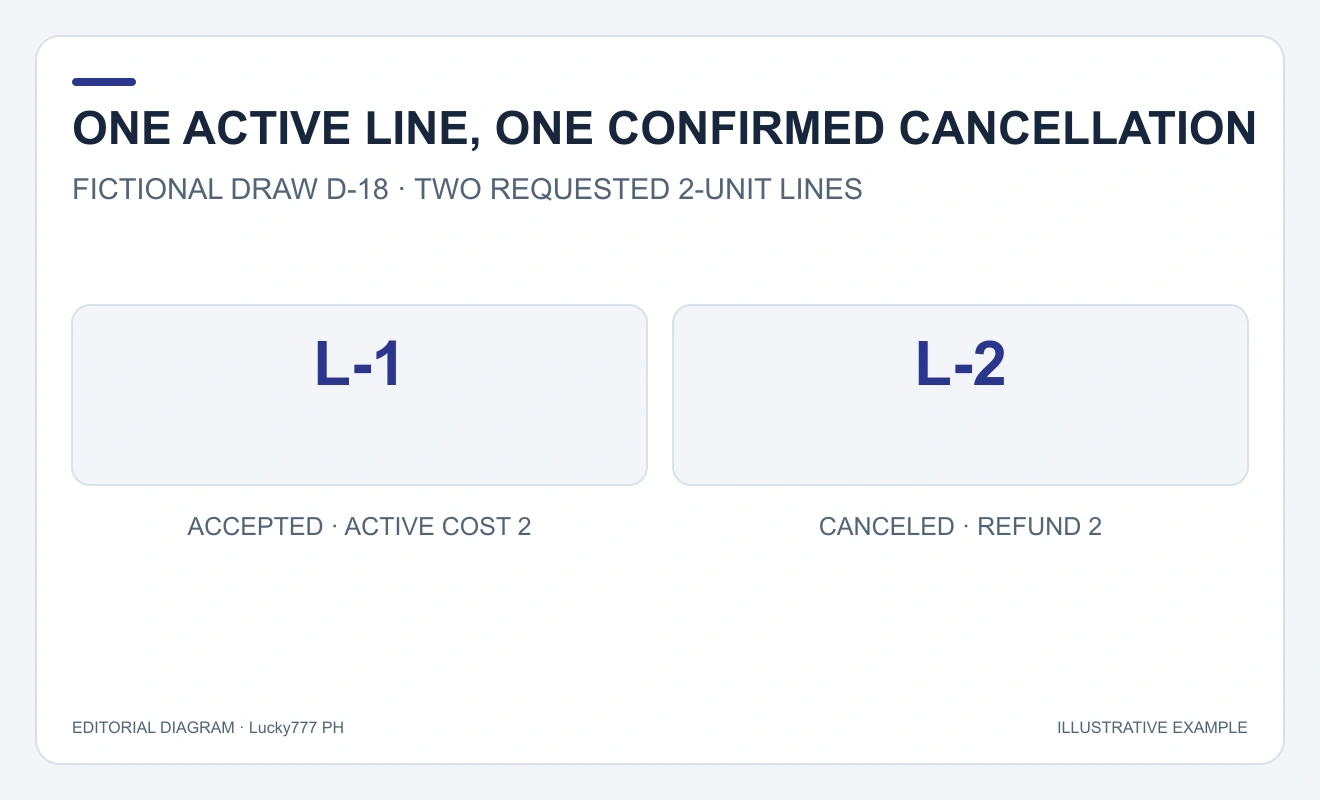
The request total was 4 units. The active accepted cost is 2, with a separate 2-unit refund. Deleting the cancellation row would hide why the totals differ; counting the canceled line as active would overstate the current entries.
A refund is not a lottery prize
The refund restores the assumed canceled cost. It does not indicate that L-2 matched a draw result. Keep the refund transaction attached to the canceled line, but classify it separately from a prize credit.
The British account-history reference supports separating debit and credit records. It does not establish a real lottery's cancellation rights, deadlines or refund process.
Check the receipt that applies
Retain the game, draw identity, accepted line ID, status and latest authoritative receipt. A cancellation request is not necessarily an accepted cancellation; if confirmation is absent, mark the line unresolved rather than removing it from the total.
Rebuild a wallet without counting the refund twice
Start this example with 10 units. If both requested lines were initially charged, two 2-unit debits leave 6. A confirmed 2-unit refund for L-2 restores the wallet to 8. The remaining reduction is 2, matching L-1's active cost.
Do not first erase L-2's debit and then add its refund as an extra gain. That would turn the same correction into two changes and incorrectly restore the wallet to 10. An audit ledger can retain both debit and reversal while an active-entry view excludes the canceled line; those views serve different purposes.
Number selections do not identify the accepted transaction
The cover's numbered balls are illustrative, not a published draw result. Two lines can even contain the same six selections while carrying different accepted IDs. Canceling L-2 does not cancel L-1 merely because their numbers match. Conversely, a replacement request with a new line ID must not inherit the old line's acceptance status without its own confirmation.
Keep pending actions unresolved
“Cancellation requested,” “cancellation confirmed” and “refund posted” are separate states. A pending request may leave the accepted line unchanged under the applicable terms. A confirmed cancellation without a posted refund requires a distinct refund-status field; it does not justify inventing a completed credit.
Record the draw ID, line ID, latest authoritative status, accepted cost, linked cancellation reference and refund transaction. Keep the original receipt and later revision rather than editing away their sequence. A visible number match alone cannot prove eligibility for a prize if the line's accepted status or draw identity is unresolved. This example describes accounting checks, not a claim that a real lottery permits cancellation after any particular deadline.